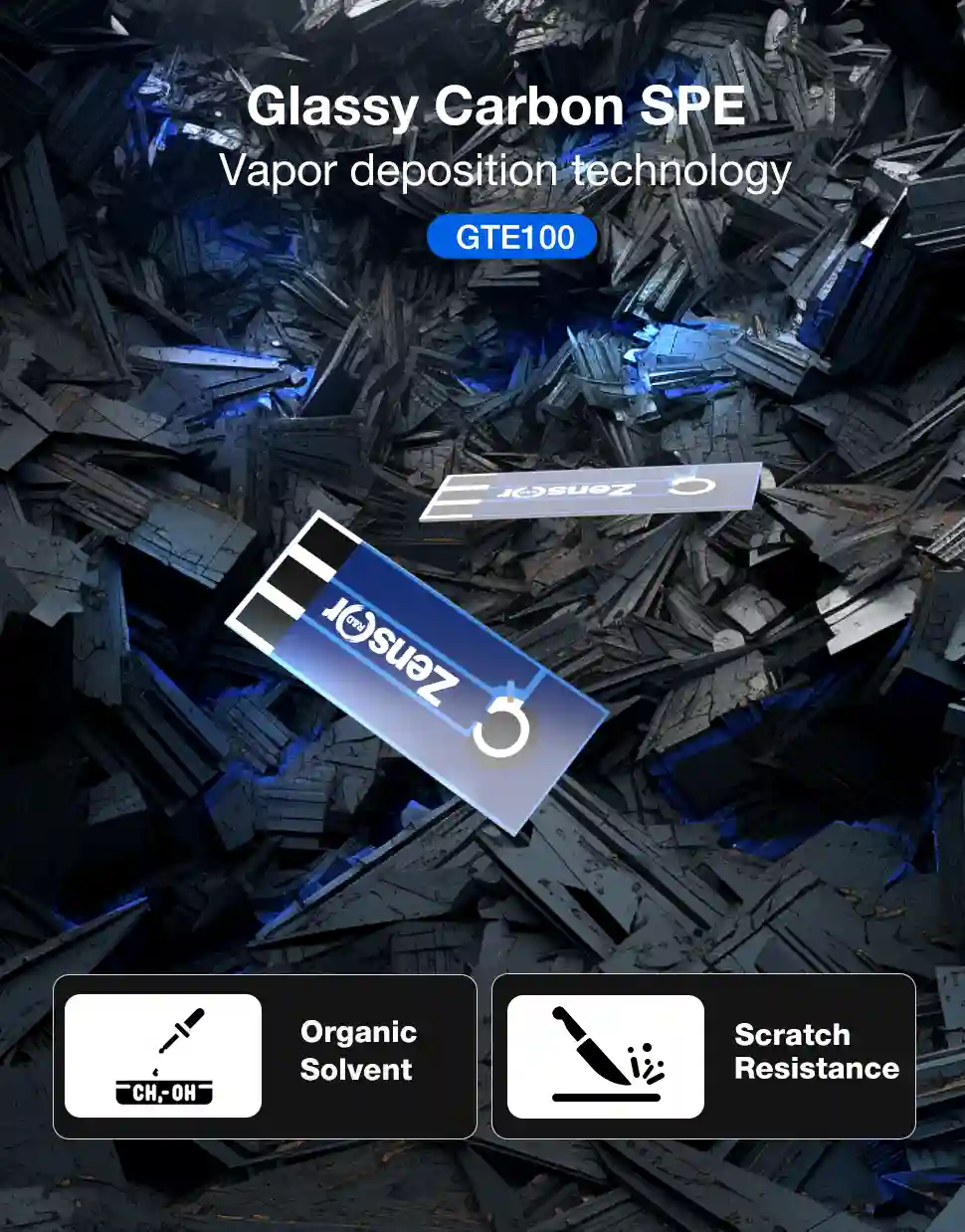
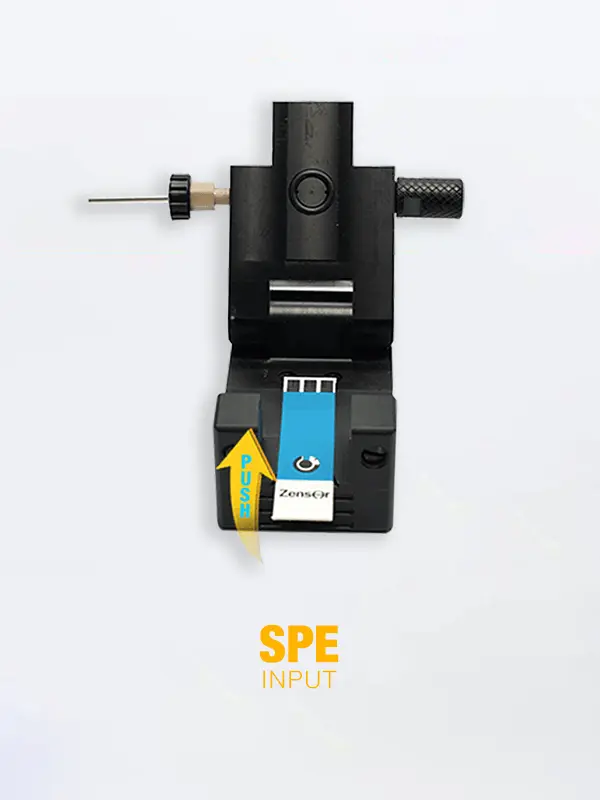
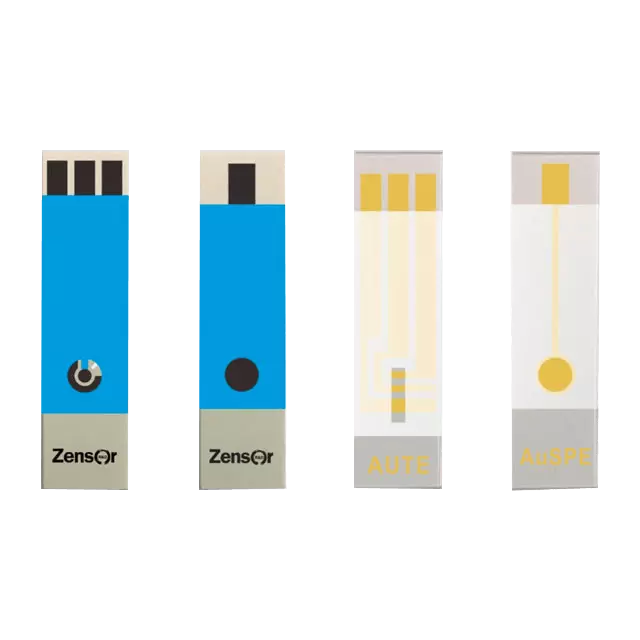
CVD (Chemical Vapor Deposition) glassy carbon electrodes combine material stability with manufacturing consistency, making them particularly suitable for biosensing and electrochemical applications. Compared to traditional electrodes, they offer several significant advantages:
6-1.2 Amine Grafting: Surface Modification to Enhance DNA Immobilization Efficiency
In DNA sensing, effectively and securely immobilizing DNA probes onto the electrode surface is key to determining sensitivity and stability. To achieve this, Zensor adopted amine grafting surface modification technology.
Key Advantages of Amine Grafting:
- - Provides amino functional groups that can form covalent bonds with DNA or probe molecules.
- - Enhances immobilization stability, preventing DNA detachment during testing and improving reproducibility.
- - Strengthens electrochemical signals, enabling clearer and more sensitive molecular recognition.
In relevant literature (Chem. Rev. 2008, McCreery et al.), amine grafting has been demonstrated as a reliable approach for modifying carbon electrode surfaces, particularly suitable for DNA sensors and biosensing platforms.
6-1.3 Zensor’s Experimental Results: Validation of Amine and Diazonium Grafting
The Zensor team conducted multiple experiments to verify the feasibility of amine grafting and diazonium grafting on CVD glassy carbon electrodes.
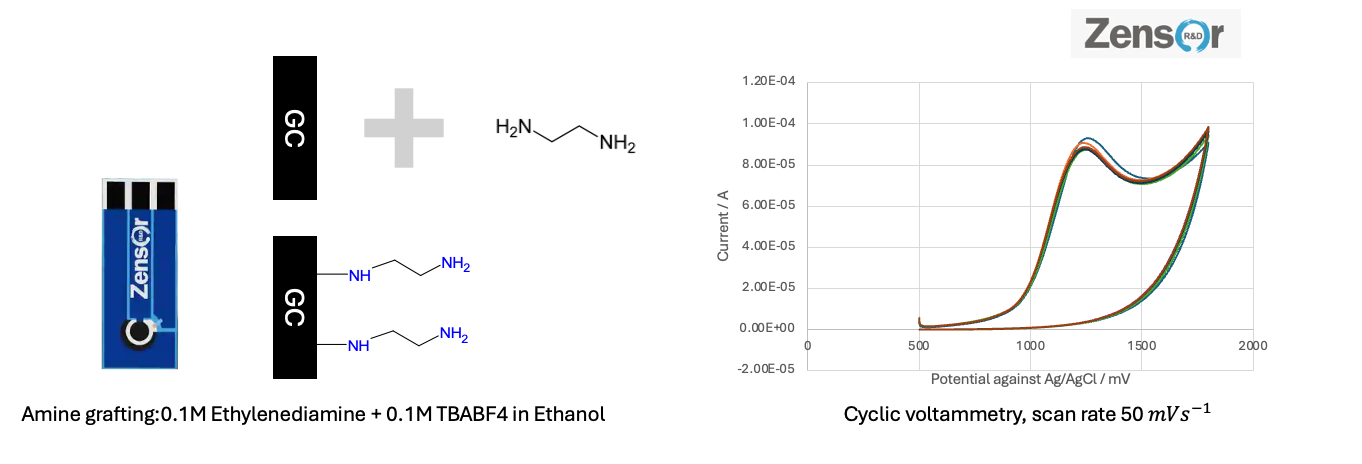
6-1.3.1 Ethylenediamine Grafting
Using ethylenediamine and tetrabutylammonium salt as the electrolyte, amino functional groups were successfully grafted onto the electrode surface. The results showed that the modified surface was more suitable for DNA probe immobilization, with excellent consistency between electrodes.
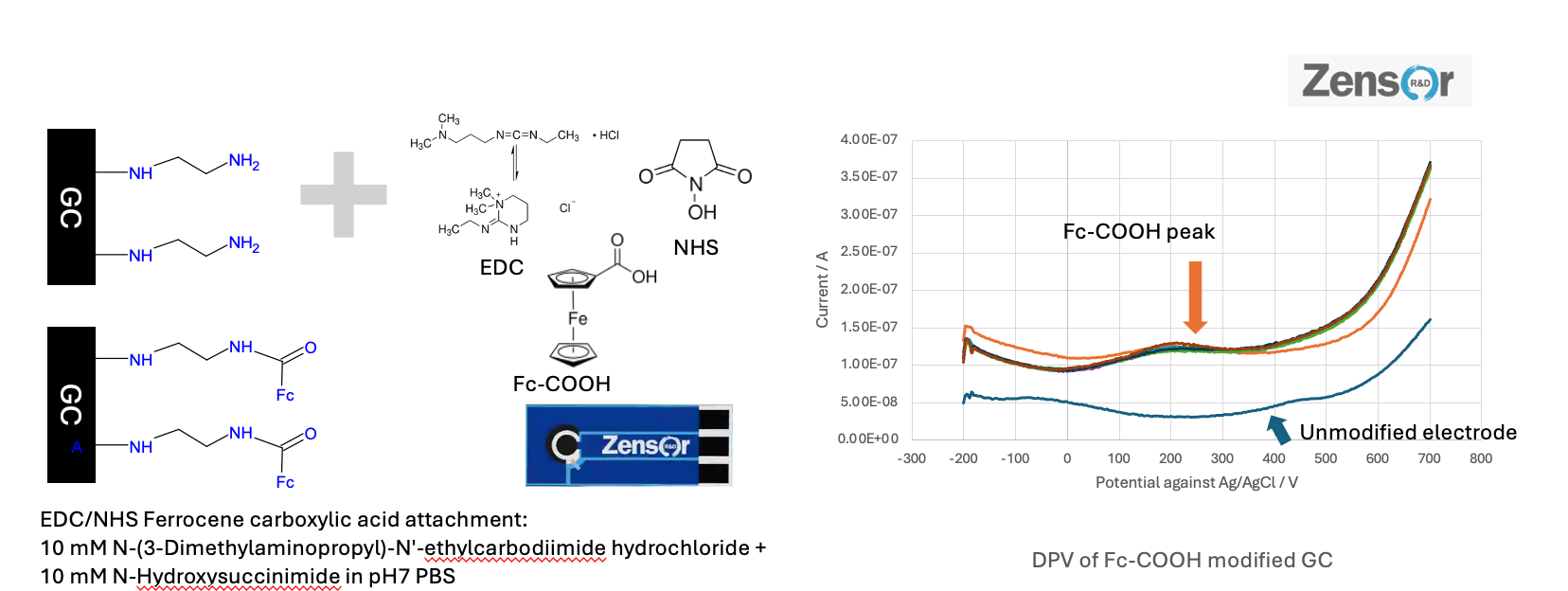
6-1.3.2 EDC/NHS Coupling of Ferrocene Carboxylic Acid
An EDC/NHS chemical coupling reaction was employed to modify the electrode surface with ferrocene carboxylic acid (Fc-COOH). Clear redox signals were successfully observed, serving as validation of the probe modification.
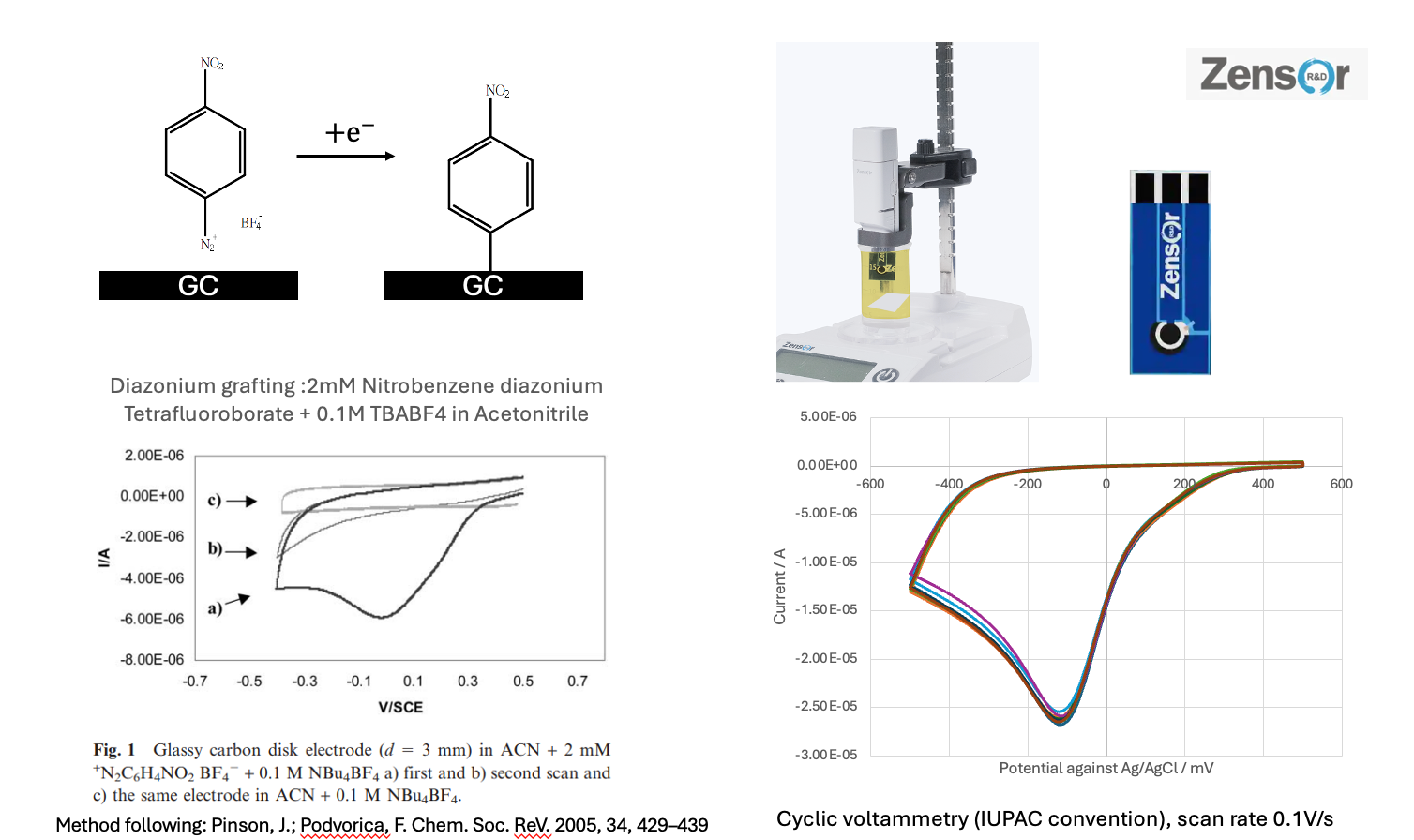
6-1.3.3 Diazonium Grafting and Nitro Group Redox Validation
Reduction grafting of 4-nitrobenzenediazonium was performed on the electrode surface, and cyclic voltammetry (CV) was used to detect the redox characteristics of the nitro group. The experiments demonstrated high reproducibility and stability, confirming the success and reliability of the surface modification.
Through these experiments, Zensor not only verified the feasibility of amine grafting but also demonstrated the stability and reproducibility of surface modification, laying a solid foundation for subsequent DNA sensing applications.
6-1.4 Why are traditional Screen-Printed electrodes (SPEs) not suitable for the application
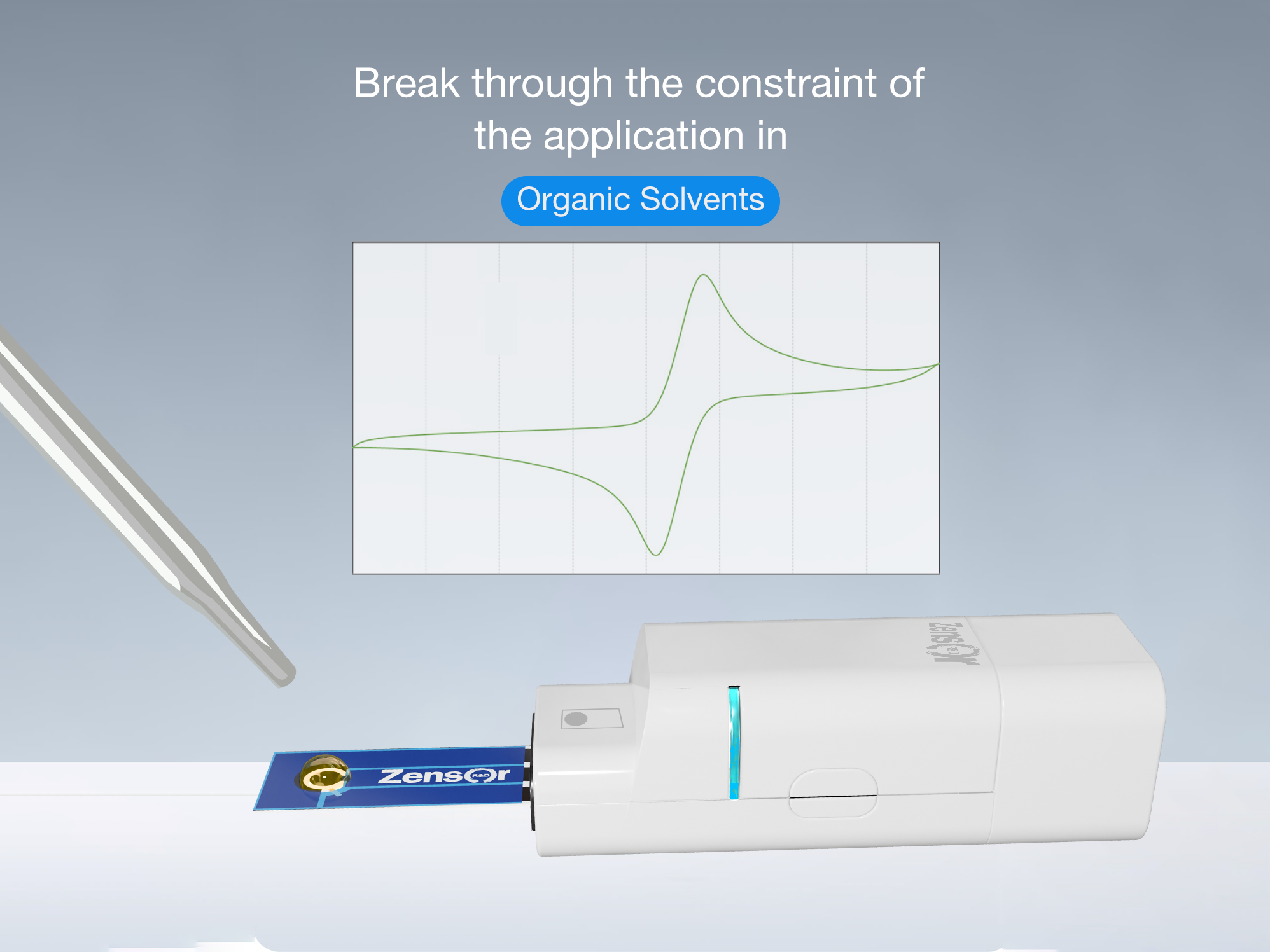
Traditional screen-printed electrodes (SPEs) are convenient and inexpensive for rapid mass production and one-time use. However, they have significant limitations in chemical and electrochemical stability. Most commercial SPEs contain high proportions of polymer resins (e.g., acrylic, epoxy, or plasticizers) and conductive fillers (carbon black, graphite, silver powder). When exposed to organic solvents (such as acetonitrile, ethanol, DMF, DMSO), these polymer substrates swell, dissolve, or leach additives, leading to cracking, delamination, or loss of conductivity. Protective or adhesive layers may also degrade in these conditions.
Many surface modification steps (such as amine electrografting in TBATFB/ACN or diazonium reduction in organic electrolytes) must be performed in polar organic solvents or low-water-content media. SPEs cannot withstand such chemical stress or potential scans, often resulting in irreversible signal degradation and poor reproducibility. Additionally, the ink composition and surface roughness of SPEs make it difficult to achieve uniform, high-density covalent functionalization, reducing DNA probe immobilization efficiency and signal quality.
In contrast, Zensor’s CVD glassy carbon electrodes are robust, chemically inert, and solvent-resistant, formed through high-temperature chemical vapor deposition. They tolerate long-term exposure to organic solvents and wide electrochemical potential windows without swelling or peeling. This allows direct execution of amine grafting, diazonium grafting, and EDC/NHS coupling in organic media, producing stable, high-density covalent layers to support sensitive and reproducible DNA sensor designs.
6-1.5 Application Scenarios of DNA Sensors
By combining disposable CVD glassy carbon electrodes with amine grafting, Zensor has established a more efficient DNA sensing platform, with applications including:
- Early disease diagnosis: e.g., cancer and genetic disease testing- 疾病早期诊断:例如癌症、遗传性疾病的基因检测。- - Clinical testing: real-time detection of patient biofluids for genes or pathogens
- - Drug monitoring: observing interactions between drugs and DNA or proteins
- - Environmental monitoring: detecting pathogenic or pollutant gene fragments in the environment
- - Food safety: rapid detection of pathogenic bacteria in food products.
6-1.6 Future Development
With the rapid growth of molecular diagnostics and personalized medicine, the demand for highly sensitive, low-cost DNA sensors will continue to increase. Zensor’s technology platform can be integrated with:
- - Lab-on-a-chip systems
- - Wearable sensors
- - AI data analysis
to create intelligent, real-time DNA detection solutions.
Conclusion
Through disposable CVD glassy carbon electrodes with amine grafting technology, Zensor has developed a DNA sensing platform that is stable, highly sensitive, and cost-effective. This technology can drive advances in clinical testing, early disease detection, and molecular diagnostics, with wide applications in healthcare, environmental monitoring, and food safety.
Think this article is helpful?
Share it with others













_DiazoniumGrafting與NitroGroupRedox驗證.png)